
In the class "From Jesus to Christ," there was a good bit of discussion about the Temple in Jerusalem, where Jesus spent a lot of time in the last week of his life.
It's important to remember that this was THE Temple. There were synagogues for community activities, Scripture study, prayers, etc. But only in the one Temple to the one God in the holy city of Jerusalem could the appropriate sacrifices and offerings be made.
The largest area in the Temple complex is the big plaza called the Court of the Gentiles. Anyone could mingle here, and this is probably where Jesus did much of his teaching. This is where the animal sellers and money changers would be found, whose tables Jesus overturned. You can also see the Roman fortress, the Antonia, on the right hand side of the diagram, where Roman soldiers could look down into the Temple precincts and keep the peace.
Each move after this is farther up and farther in, closer to the Holy of Holies, where God lived. And each area after this is more restrictive. There is the Court of the Women, and any Jew, male or female could go there. There is the Court of Israel, and that's as far as ritually pure Jewish men could go. From this court, they could see the priests conducting the animal sacrifices on the altar. Everything beyond that is the Court of the Priests, where the Temple priests performed the sacrifices (you can see the large altar on the porch in front of the Holy Place) in public view.
Inside the Holy Place, there was a veil or curtain behind which was the Holy of Holies, where God lived. In front of the veil, the vessels of the temple, the menorah, the incense-burning altar and other implements were found
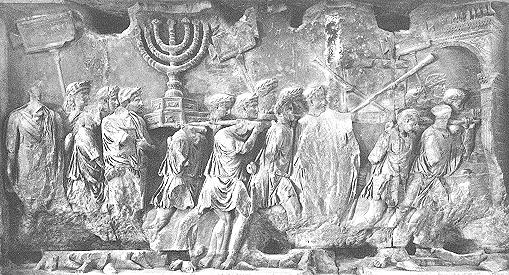 The Romans destroyed this Temple in 70 A.D. No successor was built in its place. Sacrificial worship ended in Judaism with the Temple's destruction, and synagogue worship arose in its place. Currently, the Dome of the Rock, a Muslim holy site, occupies the place on Temple Mount in Jerusalem, where the Temple once stood. The Western Wall (or Wailing Wall) is all that remains of Herod's Temple.


 Posts
Posts

